
If you experience frequent jaw pain, headaches, clicking sounds, or discomfort when chewing, you may be dealing with a temporomandibular joint (TMJ) disorder. These conditions can make everyday activities uncomfortable and sometimes interfere with your quality of life.
There are several potential causes of TMJ disorders, including stress, teeth grinding, and problems with your bite alignment. If your upper and lower teeth don’t fit together properly, the resulting strain may contribute to jaw discomfort. In certain cases, Invisalign can help address these alignment issues and reduce some TMJ symptoms.
How Does Bite Alignment Affect TMJ Health?
Your temporomandibular joints connect your lower jaw to your skull, allowing you to speak, chew, yawn, and move your mouth comfortably. These joints work alongside the surrounding muscles and ligaments to support everyday jaw movement.
Ideally, your upper and lower teeth should come together in a balanced way when you bite down. However, certain alignment problems, including overbites, underbites, and crossbites, can affect how your teeth meet.
When your bite is uneven, certain teeth may experience more pressure than others. This can contribute to muscle tension, uneven forces during chewing, and additional strain on the jaw joints. Over time, these issues may play a role in TMJ-related discomfort.
Of course, bite alignment isn’t the only potential cause of TMJ disorders. Stress, clenching, grinding, joint inflammation, and other factors can also contribute to symptoms.
Can Invisalign Help Relieve TMJ Symptoms?
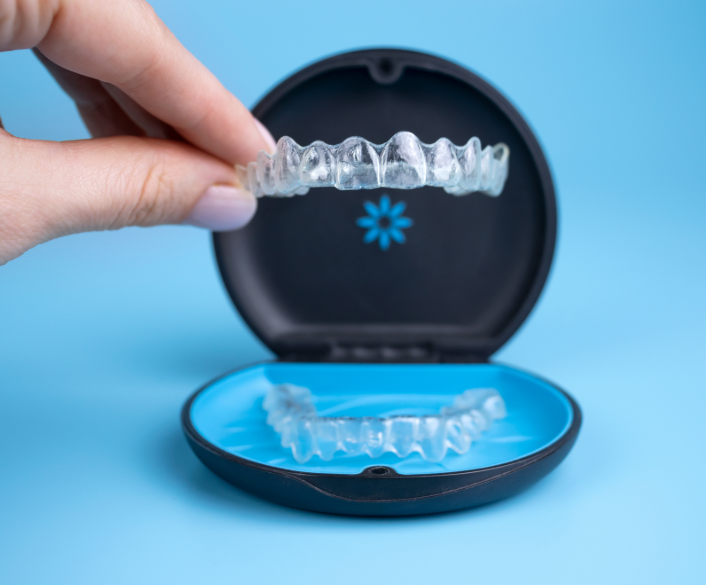
Invisalign uses a series of custom-made, removable plastic aligners to gradually reposition your teeth. Although it’s commonly associated with cosmetic smile improvements, it can also address certain orthodontic problems that affect your bite.
For example, if an overbite, underbite, or crossbite contributes to uneven pressure when you chew, correcting that alignment may help create a more balanced bite. This could reduce some of the strain placed on your jaw muscles and joints.
Another potential benefit is that Invisalign aligners cover your teeth during treatment. While they’re not designed to replace a nightguard, they may provide a physical barrier between opposing teeth for some patients who clench or grind.
However, Invisalign isn’t a guaranteed treatment for TMJ disorders. It primarily addresses tooth positioning and bite alignment, so it may not resolve symptoms caused by joint damage, inflammation, or muscular conditions.
Is Invisalign Right for Your TMJ Disorder?
Before beginning treatment, it’s important to understand what’s causing your jaw discomfort. A dental evaluation can help identify bite problems and determine whether orthodontic treatment might be beneficial.
Depending on your symptoms, your dentist may recommend Invisalign alongside other TMJ therapies. These could include a custom oral appliance, lifestyle adjustments, jaw exercises, or other treatments designed to relieve muscle tension and protect your joints.
If your symptoms are related to bite misalignment, correcting your teeth’s positioning may be one part of a comprehensive treatment plan.
Explore Your Options for a Healthier Smile and More Comfortable Jaw
You don’t have to simply accept persistent jaw discomfort as part of everyday life. With an evaluation and the right treatment approach, you can explore ways to improve your bite, protect your jaw joints, and feel more comfortable.
About the Practice
Northwest Family Dental in Huntsville is led by Dr. Kevin Grill, who earned his undergraduate and dental degrees from The Ohio State University. Inspired by his own experience with orthodontic treatment, Dr. Grill enjoys helping patients achieve healthy, beautiful smiles and greater confidence. He is Invisalign-certified and has pursued additional continuing education in endodontics and oral surgery, allowing him to offer patients a variety of treatment options. Dr. Grill is passionate about combining the artistry and science of dentistry to help every patient reach their smile goals.
Call us at (937) 843-3932 or schedule your appointment online